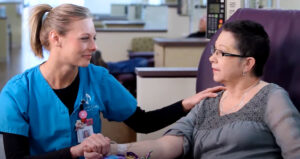



St. Luke’s Palliative Care program was established 20 years ago this month. The program began in 2005 with just a nurse, social worker and part-time physician making up the Palliative care team which focused solely on inpatient care. Two decades later it has grown into a dynamic, multi-disciplinary team dedicated to supporting patients and families throughout their care journey both inside and outside of the hospital, while collaborating with multiple different specialties.
Improving Patients’ Quality of Life
Palliative care is a medical specialty focused on helping patients and their families make medical decisions that align with their goals for their healthcare. In addition to improving quality of life and helping with symptom management, the team helps patients understand their options for medical treatment.
“The department cares for patients of all ages who have serious, life-limiting medical conditions including heart disease, lung disease, cancer, stroke with serious impairment, progressive neurological disease, kidney failure and dementia,” said Maureen McEvoy, manager of St. Luke’s Palliative Care. “Palliative care can be provided inside or outside the hospital and is done in collaboration with the patient’s primary care provider and other specialists across the care continuum.”
A Multi-Disciplinary Team
The Palliative Care team is a patient-centered group of nearly 20 team members providing specialized expertise and comprehensive care for our patients.
Our physician and nurse practitioners are board-certified in hospice and palliative care, and work to manage complex symptoms, communicate with other specialists, and help patients and families make informed decisions.
Registered nurses provide ongoing monitoring and coordination of care in hospital and community settings, while offering direct support for families, including facilitating family meetings and assisting with advance care planning.
Our team of social workers provide emotional support while addressing practical concerns such as insurance, community resources and care coordination. They also play a vital role in fostering communication within families and guiding discussions about advanced care planning.
Our team also includes chaplains who support patients’ and families’ spiritual and religious needs, regardless of faith tradition. They help individuals explore questions of meaning, hope, forgiveness, and legacy, offering compassionate companionship throughout the healthcare journey.
Also crucial to the care team are the patients’ families and caregivers. Their insights guide care planning, and they receive ongoing support and education to help them navigate their caregiving roles effectively.
Reflecting on the Past Two Decades
For McEvoy, the greatest accomplishment for this team in the past 20 years has been the integration and collaboration with other service lines.
“Our first major step was integrating palliative care into the cancer world,” she said. “We’ve continued to build from there, most recently working with cardiology to introduce palliative care earlier in the course of treatment. Other accomplishments for this team includes offering home visits, evolving our social work program to provide a deeper level of emotional and psychosocial support, and how nursing has become a corner stone of our program, playing a vital role in all aspects of patient care.”
Also, reflecting on the past two decades was social worker Nancy Yeisley, MSW, LISW, OSW-C, who was the program’s first social worker when it started in 2005.
“St. Luke’s developed the Palliative Care program because it identified a gap in services for patients with chronic, non-curable illnesses between when they have acute needs and when they go on hospice care,” she said. “They would be in the hospital frequently, often on different floors and with different caregivers, and follow up with their primary care provider. Palliative care was designed to bridge that gap by providing continuity from one hospitalization to the next with a nurse and social worker duo who were dedicated to specific patients, and not just to individual units of the hospital. This innovative approach allowed us to serve patients even better when it came to symptom management, goals of care, family meetings, etc.”
An Exciting Future for Palliative Care
McEvoy is excited for the future of Palliative care as St. Luke’s plans to integrate the service into more healthcare settings at every stage of serious illness.
“We’re integrating palliative care into treatment plans earlier,” she said. “Rather than focusing solely on patients nearing end-of-life care, we offer it alongside curative treatments help patients manage symptoms, make informed choices, and maintain quality of life from diagnosis onward.”
She’s also pleased to see medical schools place a growing emphasis on the palliative care specialty.
“More medical schools and residency programs are including palliative care training and preparing future clinicians to communicate compassionately and manage complex symptoms effectively,” McEvoy shared. “This shift is helping to normalize palliative care as a standard part of comprehensive medicine.”
Finally, she sees the field embracing a more holistic view of care that values not only the patients’ physical needs, but their emotional, social, cultural and spiritual needs as well.
“There’s growing recognition of the importance of supporting families and caregivers in all aspects according to their individual preferences,” she shared. “In essence, the future of palliative care is one of greater accessibility, integration, and personalization—ensuring that every person living with serious illness receives compassionate, coordinated, and meaningful support throughout their journey.”
Palliative Care is all about you
Our designated palliative care team is here to support you and your family regarding medical decisions related to your serious illness. Our purpose is to focus on your quality of life while considering your healthcare decisions and goals. To learn more, visit unitypoint.org.