

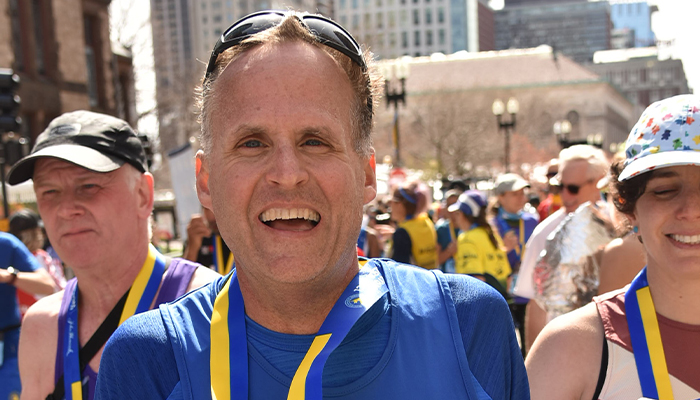
If you were to picture the “typical” colon cancer patient, you probably wouldn’t picture someone like Phil Decker. Under 50, in excellent physical shape, and a multiple-time marathon runner, Decker seemed the picture of health. Yet in January 2022, he became part of a growing and alarming trend: people under 50 being diagnosed with colon cancer. Instead of letting the diagnosis define him, Decker has used it to raise awareness locally and nationally.
An Unexpected Diagnosis Becomes a Wake-Up Call
Decker was feeling great when he went in for his annual physical with UnityPoint Clinic Internal Medicine Physician Alecia Allen, MD. He was 46 at the time, and because of this, Dr. Allen shared with him that he was eligible for a screening colonoscopy under newly released guidelines from the United States Preventive Services Task Force (USPSTF), which had lowered the recommended age patients should start screening from 50 to 45.
He wasn’t experiencing any symptoms, but he took Dr. Allen’s advice and scheduled the procedure. Decker had his screening colonoscopy at UnityPoint Health – St. Luke’s Hospital in Cedar Rapids, performed by Pavan Chepyala, MD. What he expected to be a routine screening instead delivered life-altering news: stage IV colon cancer that had already spread to his liver.
“Dr. Allen had never told me to get a test in my life, so when she recommended I get a colonoscopy, I trusted her and listened to her,” said Decker. “She probably saved my life. She’s my guardian angel.”
Turning Treatment into Awareness
Decker isn’t “one of those guys who’s going to sit on the couch and let cancer win,” so he ran – as much as he physically could – throughout his treatment. And he wasn’t just running around the block. He trained for and ran the Boston Marathon that year while in active treatment. And while that feat was impressive on its own, Decker didn’t do it for personal glory. He did it because he was inspired to raise awareness and give back.
“The first day I was in chemo, I received a backpack from the I Know Jack Foundation,” said Decker. “In this backpack was Jack’s story and how he dealt with cancer. I was unbelievably impressed with how his family has paid it forward and decided right then I was going to raise money to support their cause and knew I’d have a big platform with the Boston Marathon.”
Decker raised tens of thousands of dollars through his marathon fundraiser, but he wasn’t done there. Next, he started a foundation dedicated to raising awareness about screening colonoscopies and raising funds for local organizations that support colon cancer patients.
Podcast Episode: Understanding Colon Cancer: What You Need to Know
Dr. Douglas Purdy, gastroenterologist at St. Luke’s Gastroenterology, joins Dr. Arnold to discuss colon cancer signs and symptoms, the importance of screening, how to reduce your risk and more.
Tell Five Friends
“Early in my treatment, people would ask ‘What can I do for you?’” said Decker. “We didn’t really have a good answer, and we finally came up with one. They say you can count your best friends on one hand, so we would say, ‘We need you to tell your five best friends to get a colonoscopy at 45.’”
With that, the Tell 5 Friends Foundation was born. Since completing treatment, Phil has been focused on spreading that message far and wide.
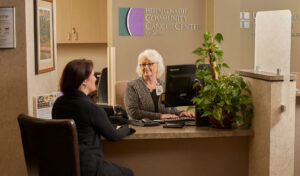
From giving talks at local events and providing financial support to multiple cancer centers – including the Nassif Community Cancer Center, where he received treatment, to attending the Call on Congress to fight Colorectal Cancer and funding clinical research trials, their mission to save lives has already made an impact.
“We’ve reached thousands of people, and I personally know of five people who heard our message, got screened and were able to catch their colon cancer in an early stage,” said Decker. “In addition, at least 100 people have had precancerous polyps removed that I’m aware of.”
A Survivor’s Message: Get Screened and Minimize Your Risk
As a stage IV cancer survivor, Decker wants people to know how important it is to advocate for and take care of yourself, both before and after a cancer diagnosis.
“The biggest thing is to advocate for yourself and get screened. And if you’re diagnosed, surround yourself with a great team and keep a positive attitude,” he said. “There are also things you can do to minimize your risk, like exercising, eating well and refraining from alcohol.”
Take Phil’s advice and talk to your primary care provider to schedule your annual screening colonoscopy today.
Get Your Screening Colonoscopy
It’s recommended individuals start screening colonoscopies at age 45, or sooner if there’s a family history of colon cancer. To schedule your colonoscopy, talk to your primary care provider or visit uph.link/Gastroenterology-Screening-Form to request a screening colonoscopy today.
Experienced Colon Cancer Care
If you’ve been diagnosed with colon cancer, the Nassif Community Cancer is here for you. For more information about the Community Cancer Center and our extensive offering of support services, which are available to all cancer patients and survivors – regardless of when or where you were treated, call (319) 558-4876 or visit communitycancercenter.org.